

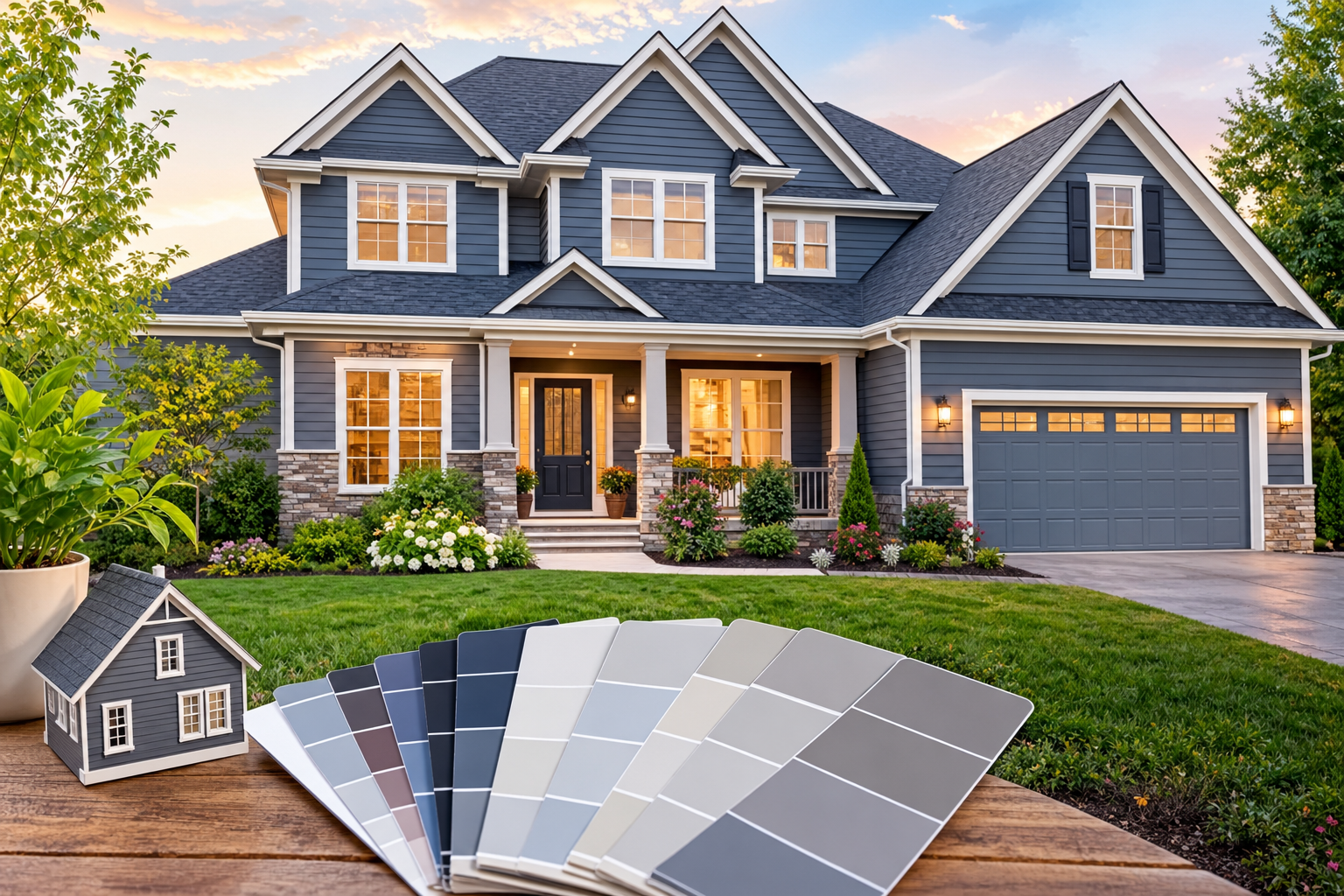
Choosing the right exterior paint can completely change how your home looks. Grey exterior house colors are a popular choice because grey can look modern, classic, warm, or dramatic depending on the shade and the colors you pair with it.
The key is not simply choosing any grey. You need to consider your home’s style, roof, trim, natural light, siding, brick, stone, and landscaping. Grey is also available in many shades, from soft light grey to deep charcoal, warm greige, and blue-grey.
This guide will help you choose a grey exterior that looks beautiful and works well with your home.
Why Choose Grey Exterior House Colors?
Grey is a remarkably flexible neutral that adapts gracefully to almost any architectural style. It bestows a clean, crisp, and elevated modern appearance upon a property while preserving a warm and inviting atmosphere.
One of its greatest advantages lies in its extraordinary spectrum of shades. Homeowners can opt for a soft, whisper-light grey to create an airy, expansive visual effect, a balanced medium grey for a timeless look, or a deep charcoal shade to make a bold, dramatic statement.
Furthermore, grey harmonizes effortlessly with various construction materials, including natural wood, cut stone, traditional red brick, metal, and vinyl or fiber-cement siding. Contemporary home designs show grey successfully paired with crisp white trim, bold black accents, earthy brown tones, and vibrant accent colors.
Best Grey Exterior House Colors by Shade
The best grey exterior house colors generally fall into a few primary color families, each offering a distinct aesthetic:
Light Grey
Light grey is a foolproof choice for homeowners seeking a bright, timeless, and welcoming facade. It forms an elegant partnership with crisp white trim, dark shutters, black roofing, and natural wood features. An added benefit of light grey is its ability to visually expand smaller structures, making the home appear noticeably larger.
Medium Grey
Medium grey introduces rich depth without driving the building’s exterior into excessively dark territory. It provides the perfect grounding backdrop for traditional, ranch, Craftsman, and transitional home designs. Pairing medium grey siding with white trim and a slate or black roof yields a remarkably balanced facade.
Dark Grey and Charcoal
Dark grey and charcoal shades deliver a striking, modern, and high-end aesthetic. These deep hues perform exceptionally well on contemporary structures, generating crisp visual contrast when offset by bright white trim or warm timber accents. Darker greys absorb more outdoor light, giving the structure a grounded and sophisticated presence.
Warm Grey and Greige
Greige expertly marries grey with soft beige or golden undertones. It serves as an essential solution when you desire a cozy, softer finish rather than a stark, cool undertone. Warm greys align beautifully with natural stone facing, warm brown roofing shingles, exposed timber beams, and rich cream-colored trim.
Blue-Grey
Blue-grey breathes a fresh, cool, and coastal character into your home’s exterior. It coordinates brilliantly with white architectural details and gray-toned stonework, offering a subtle hint of color while remaining strictly within a sophisticated neutral palette.
Popular Paint Colors to Consider
If you are comparing grey exterior house colors, examining real-world, proven paint shades can make your selection process vastly simpler.
Some universally acclaimed paint shades frequently recommended by exterior design experts include:
- Stonington Gray – A versatile, classic light-to-medium grey with refined undertones.
- Storm – A rich, grounded medium grey that holds up well in intense sunlight.
- Kendall Charcoal – A luxurious, deep charcoal that exudes modern elegance.
- Gray Screen – A crisp, cool light grey with a fresh blue undertone.
- Peppercorn – A dramatic, near-black dark grey that works brilliantly as a main or accent shade.
- Iron Ore – A deep, moody charcoal-black hue ideal for modern and modern farmhouse styles.
- Slate Pebble – A balanced, muted grey that pairs seamlessly with natural elements.
- Gravity – A smooth, serene blue-grey that adds subtle personality to traditional facades.
Remember that these named shades serve as excellent starting points rather than absolute rules. Always apply test swatches directly to your siding, as varying natural light and surrounding masonry will noticeably influence the final color presentation.
Grey House With the Right Trim
One of the most effective ways to elevate grey exterior house colors is to pair them with the right trim and accent colors.
- Grey and White: Crisp white trim yields a clean, high-contrast frame that suits virtually every shade of grey, particularly medium and dark tones.
- Grey and Black: Black shutters, rain gutters, window frames, or front doors lend an ultra-modern, high-contrast, and tailored aesthetic to a grey house.
- Grey and Natural Wood: Warm timber accents—such as a wood front door, porch columns, exposed beams, or garage doors—instantly soften cool grey siding.
- Grey and Cream: Soft cream or off-white trim tones down the harshness of darker or cooler greys, creating a cozy and classic feel.
- Grey and Red: For a captivating pop of color, incorporating a rich red front door against grey siding establishes a clear, beautiful focal point.
Grey Exterior Colors for Different House Styles
Selecting the finest grey exterior house colors also involves honoring your home’s structural design:
- Modern: Opt for rich charcoal, graphite, or dark slate grey paired with stark black trim and metal accents.
- Modern Farmhouse: Combine warm greige or light grey siding with bright white trim and rich, natural wood doors or porch posts.
- Craftsman: Utilize medium grey siding alongside natural stone bases and stained timber features.
- Colonial: Classic light grey siding paired with stark white trim and dark, contrasting window shutters maintains architectural heritage.
- Ranch: A soft medium or light grey gives a sprawling ranch-style home a fresh, contemporary update.
- Coastal: Cool blue-grey siding contrasted with bright white trim captures a relaxed, ocean-inspired vibe.
- Contemporary: Deep charcoal grey integrated with stone veneers, wood paneling, and glass features builds a sleek visual statement.
Consider Your Roof, Brick, and Stone
Before finalizing your grey exterior house colors, carefully audit the unchangeable exterior elements of your property.
- Roofing: A black, charcoal, or dark grey asphalt roof effortlessly supports almost any light or dark grey paint. Conversely, brown or warm-toned roofs pair much better with warm greys and greiges.
- Brickwork: If your home features red or orange brick, avoid cool greys with heavy blue undertones that might clash. Warm greys and greiges create a far smoother, more harmonious transition.
- Stone Facing: Ensure your paint choice complements the secondary colors present in your stonework. Blue-grey or warm greige siding typically provides a comfortable contrast against grey and beige natural stone.
Why Undertones Matter
Grey is rarely just grey. Almost all grey paints contain subtle undertones of blue, green, purple, or brown.
This explains why two paint samples that appear identical on paper can look drastically different when applied to your wall. For example, a cool blue-grey might look crisp and energetic in direct sunlight but turn cold in shaded areas. On the other hand, a warm brown-grey (greige) remains soft and inviting across varying light conditions.
Mastering undertones is easily one of the most critical steps in choosing the right exterior paint.
What Is LRV and Why Does It Matter?
LRV stands for Light Reflective Value. It measures the percentage of light a paint color reflects on a scale from 0% (absorbs all light / pure black) to 100% (reflects all light / pure white).
Higher-LRV colors reflect more sunlight and make a house look brighter and lighter. Lower-LRV colors absorb light, resulting in a richer, darker appearance. Understanding a color’s LRV prevents surprises, helping you judge whether a dark charcoal will look striking or overly heavy under direct sunlight.
How to Choose the Right Grey
To avoid costly painting mistakes, test your favorite grey exterior house colors thoroughly before buying large quantities.
Follow these proven steps:
- Obtain large paint sample boards or sample cans.
- Paint sample patches directly on different sides of your home’s exterior.
- Observe the swatches at various intervals—morning, mid-day, and late afternoon.
- Position samples directly adjacent to fixed elements like your roofline, brick, stone, and trim.
- Evaluate the samples under different weather conditions (full sunshine versus overcast skies).
- Step back and view the colors both from the street and up close.
Grey Exterior House Colors: Mistakes to Avoid
Even top-quality grey exterior house colors can fall short if applied without considering the surrounding environment. Avoid these common pitfalls:
- Selecting a shade without checking its underlying undertones.
- Ignoring the color of your roof shingles and fixed masonry.
- Relying solely on tiny paper paint swatches.
- Failing to create sufficient contrast between the main body and the trim.
- Applying an ultra-dark charcoal without testing how hot it gets or how dark it looks in shade.
- Picking a paint hue purely because it looked attractive in a digital photograph.
Frequently Asked Questions
What are the best grey exterior house colors?
The ideal shade depends on your home’s architecture, sunlight exposure, roof color, and hardscaping. Light grey, warm greige, medium grey, blue-grey, and charcoal are all exceptional choices.
What colors go well with a grey house?
White, off-white, black, natural wood tones, rich navy, dark brown, and deep red accents all harmonize beautifully with grey exteriors.
What trim color looks best with grey siding?
Crisp white remains the most timeless choice. However, black, warm cream, and stained natural wood also produce stunning combinations depending on the undertone of the main grey.
Is grey a good exterior color for a house?
Yes. Grey is an enduring, flexible neutral that enhances the curb appeal of modern, traditional, farmhouse, Craftsman, Colonial, ranch, and coastal homes alike.
Final Thoughts
The best grey exterior house colors are not simply the trendy or most popular shades on the market. The perfect choice is the one that works in complete harmony with your home’s distinct architectural style, roof line, trim details, permanent stone or brick, and natural landscape.
Begin by determining whether your property naturally suits a light, medium, dark, warm, or cool grey baseline. From there, pay close attention to undertones, test large paint samples on-site, and evaluate how the color behaves under changing sunlight throughout the day.
By carefully pairing your chosen grey siding with complementary trim, matching roofing, and inviting accents like natural wood or masonry, you will create a cohesive exterior that remains stylish, balanced, and welcoming for many years to come.
