

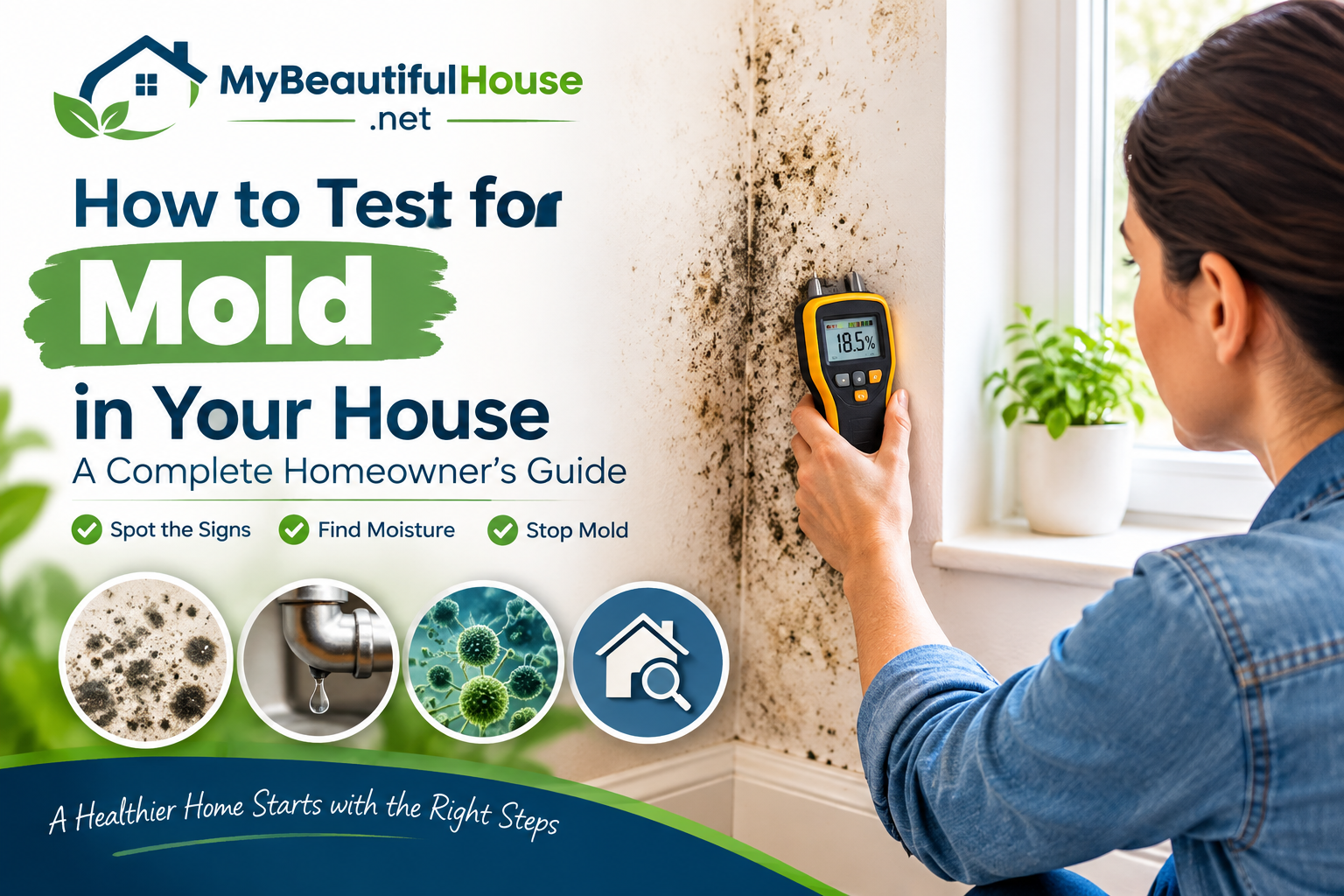
If you are wondering how to test for mold in your house, you may be tempted to buy a DIY home testing kit and wait for the results. However, physical testing is rarely the best first step. In most cases, the most practical way to investigate is to inspect your home for visible growth, musty odors, water leaks, and excess moisture.
Health and environmental authorities—including the U.S. Environmental Protection Agency (EPA), Centers for Disease Control and Prevention (CDC), and state departments of health—generally do not recommend routine testing when growth is already visible. Because there are no federal health-based limits for indoor mold spores, laboratory results cannot definitively tell you whether your home is “safe” or “unsafe.”
This comprehensive guide explains how to test for mold in your house effectively, when testing is actually worth your money, how to investigate hidden moisture, and what to do if you find a problem.
Is Mold Testing Really Necessary?
Before spending money on a kit to figure out how to test for mold in your house, it helps to know if sampling will actually change your next steps.
If you can already see mold or consistently smell a persistent musty odor, testing is usually an unnecessary expense. Mold requires moisture to thrive. The actionable response is simple: identify the water source, repair it, and safely clean or remove the affected materials.
- CDC Guidance: The CDC advises against routine home testing because no universal standards exist for an “acceptable” level of indoor mold.
- EPA Guidance: The EPA confirms that sampling is unnecessary when mold is clearly visible, as the resolution remains the same regardless of test outcomes.
When Mold Testing Makes Sense
While routine testing isn’t usually required, knowing how to test for mold in your house using targeted professional sampling can be useful in specific situations:
- Post-Remediation Verification: To confirm that a professional cleanup was successful and airborne spore counts have returned to normal baseline levels.
- Hidden Contamination: Investigating unexplained physical symptoms or persistent odors where no mold is visibly present.
- Legal & Real Estate Disputes: Providing objective documentation for landlord-tenant disputes, insurance claims, or property sales.
- Unclear Scope: Evaluating the full extent of damage inside walls or large building structures.
Note: When testing is genuinely required, professional sampling is strongly recommended over off-the-shelf kits.
Common Mold Testing Methods & Their Limitations
Understanding how to test for mold in your house using different methods helps you avoid common traps and misinterpretations.
1. DIY Home Test Kits
Available at hardware stores, these kits usually involve opening a petri dish to collect settling spores.
- The Problem: Mold spores exist naturally in all indoor and outdoor air. A petri dish will almost always grow mold, but this does not prove you have an abnormal or dangerous infestation. Furthermore, it cannot locate the moisture source. Positive DIY results offer little diagnostic value.
2. Air Sampling
Professionals use specialized pumps to measure airborne spore concentrations compared to outdoor baseline samples.
- The Limitation: Spore levels fluctuate dramatically based on humidity, airflow, and time of day. According to NIOSH, a single short-term air sample may not accurately reflect long-term exposure or overall building health.
3. Surface Sampling
Involves using swabs, tape lifts, or vacuum samples from suspicious surfaces to identify material composition.
- Best Use Case: Helpful primarily after cleanup to verify that a surface is thoroughly sanitized, or to differentiate between dirt and actual biological growth.
The Better Approach: Inspect for Moisture
When researching how to test for mold in your house, you will quickly realize that a moisture inspection is far more valuable than simply counting spores. Thoroughly check your home for:
- Plumbing & Roofs: Leaky pipes beneath sinks, dripping water heaters, or damaged roof shingles.
- Building Envelope: Water stains on ceilings, damp drywall, or swollen baseboards.
- HVAC & Condensation: Wet window sills, standing water in AC condensate pans, or damp ductwork insulation.
- Enclosed Spaces: Water accumulation in crawl spaces, basements, or beneath wet carpet lining.
If you find dampness, address it immediately. The CDC emphasizes that drying water-damaged areas within 24 to 48 hours is critical to preventing mold growth.
How to Check for Hidden Mold
Knowing how to test for mold in your house when it is hidden behind walls or under flooring requires a different strategy. Consider a hidden problem if:
- A heavy, musty odor persists even after thorough cleaning.
- Paint repeatedly bubbles, blisters, or peels off walls.
- A room consistently feels unusually damp or humid.
- A previous water leak was never completely dried out.
Using a Moisture Meter
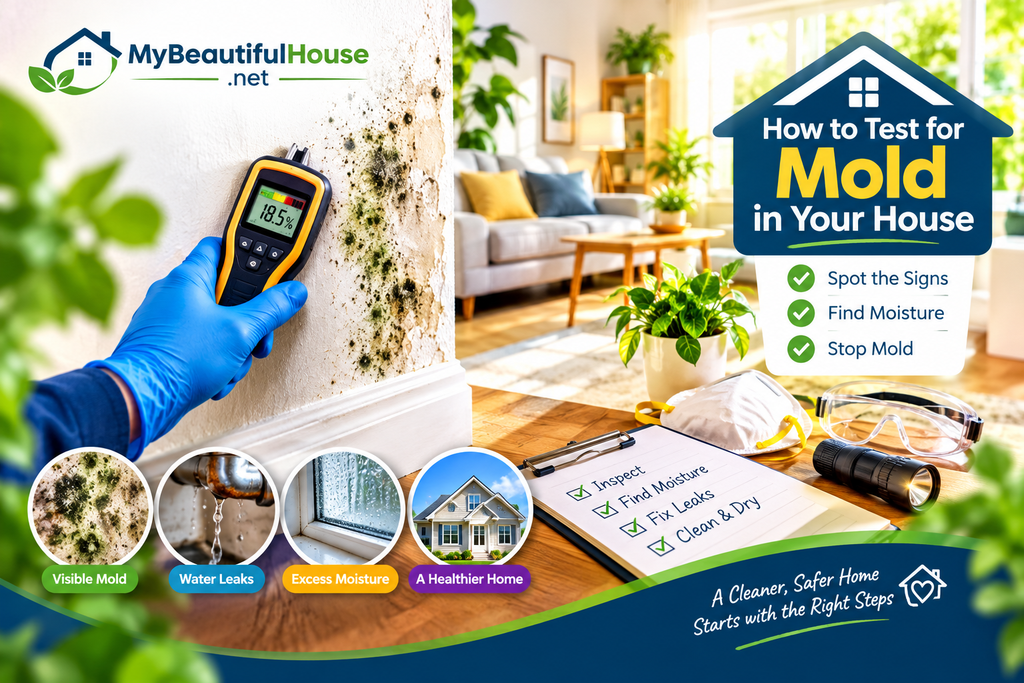
A moisture meter measures the dampness inside building materials relative to surrounding areas. While it does not detect mold directly, it pinpoints hidden wet spots where mold is likely growing.
Caution: Avoid ripping open drywall or pulling off wallpaper blindly. Disturbing large areas of hidden mold without proper containment can release millions of spores into your living space.
Can You Identify Mold by Its Color?
No. A common myth when learning how to test for mold in your house is that toxic mold can be identified strictly by a black appearance.
Mold appears in black, green, white, gray, brown, yellow, and orange. Color alone does not tell you the species or its toxicity. The Florida Department of Health notes that visible mold should be treated and removed regardless of its color or strain. Practical priority should always be remediation, not identification.
Step-by-Step: What to Do When You Find Mold
Finding mold requires a two-part solution: eliminate the growth and fix the moisture source. Cleaning mold without fixing the leak guarantees it will return.
[Locate Water Source] ➔ [Repair Leak/Moisture] ➔ [Safely Clean/Remove Mold] ➔ [Dry Thoroughly]
1. Cleaning Small DIY Areas (Under 10 Sq. Ft.)
The EPA considers areas smaller than 10 square feet (roughly a $3 \times 3$ foot patch) manageable for DIY homeowner cleanup, provided you do not have respiratory issues or underlying health conditions.
- Hard Non-Porous Surfaces (Tile, Metal, Glass): Clean with commercial mold cleaners, a detergent-and-water mix, or diluted household white vinegar. Bleach can be used on non-porous surfaces, but avoid using it on porous drywall or wood.
- Porous Materials (Drywall, Carpet, Ceiling Tiles): Porous materials that have absorbed mold inside their fibers usually cannot be completely sanitized and should be cut out and discarded.
- Safety Gear: Always wear an N95 respirator mask, rubber gloves, and protective goggles during cleanup.
2. When to Hire a Professional
Call a certified mold remediation specialist if:
- The affected area is larger than 10 square feet.
- The water damage involves sewage or contaminated floodwater.
- The mold is located inside the main HVAC heating and cooling duct system.
- High-risk individuals (those with asthma, severe allergies, or compromised immune systems) reside in the home.
Checklist: Finding and Resolving Household Mold
If you are evaluating how to test for mold in your house step-by-step, use this visual guide to systematically address suspected issues:
| Step | Action Item | Primary Goal |
| 1 | Visual & Olfactory Inspection | Look for discoloration and trace musty odors. |
| 2 | Moisture Tracking | Check plumbing, AC drain pans, roofs, and window seals. |
| 3 | Fix the Source | Repair active leaks or install dehumidifiers to keep humidity below 50%. |
| 4 | Evaluate Scope | Determine if the area is under 10 sq. ft. (DIY) or larger (Professional). |
| 5 | Safe Remediation | Clean hard surfaces, discard porous materials, and wear safety gear. |
| 6 | Thorough Drying | Ensure materials are completely dry within 24–48 hours. |
Frequently Asked Questions
Does a home mold test tell you if your house is safe?
No. Because there are no federal health limits establishing safe versus unsafe spore counts, laboratory numbers alone cannot prove whether an environment is safe.
Are DIY petri-dish mold kits reliable when learning how to test for mold in your house?
No. They routinely collect normal, outdoor spores present in every home and yield positive growth, creating unnecessary panic without identifying the actual cause or location of damage.
Can I use bleach to kill mold on drywall?
Bleach is effective on hard, non-porous surfaces like tile and vinyl, but it does not penetrate porous drywall effectively. Chlorine stays on the surface while water sinks in, often feeding the mold roots beneath. Cut out heavily moldy drywall instead.
Does black mold always require professional testing?
No. The color black does not automatically mean it is a dangerous strain like Stachybotrys chartarum. All molds should be treated with the same containment and cleanup precautions regardless of color.
Summary
When deciding how to test for mold in your house, remember that testing is rarely about buying a kit—it starts with a visual check, paying attention to smells, and finding hidden dampness.
How you choose how to test for mold in your house after remediation or during legal property disputes should be based on targeted goals. In most everyday situations, save your money on testing kits and apply those resources directly toward fixing moisture leaks and safely removing affected materials.
